
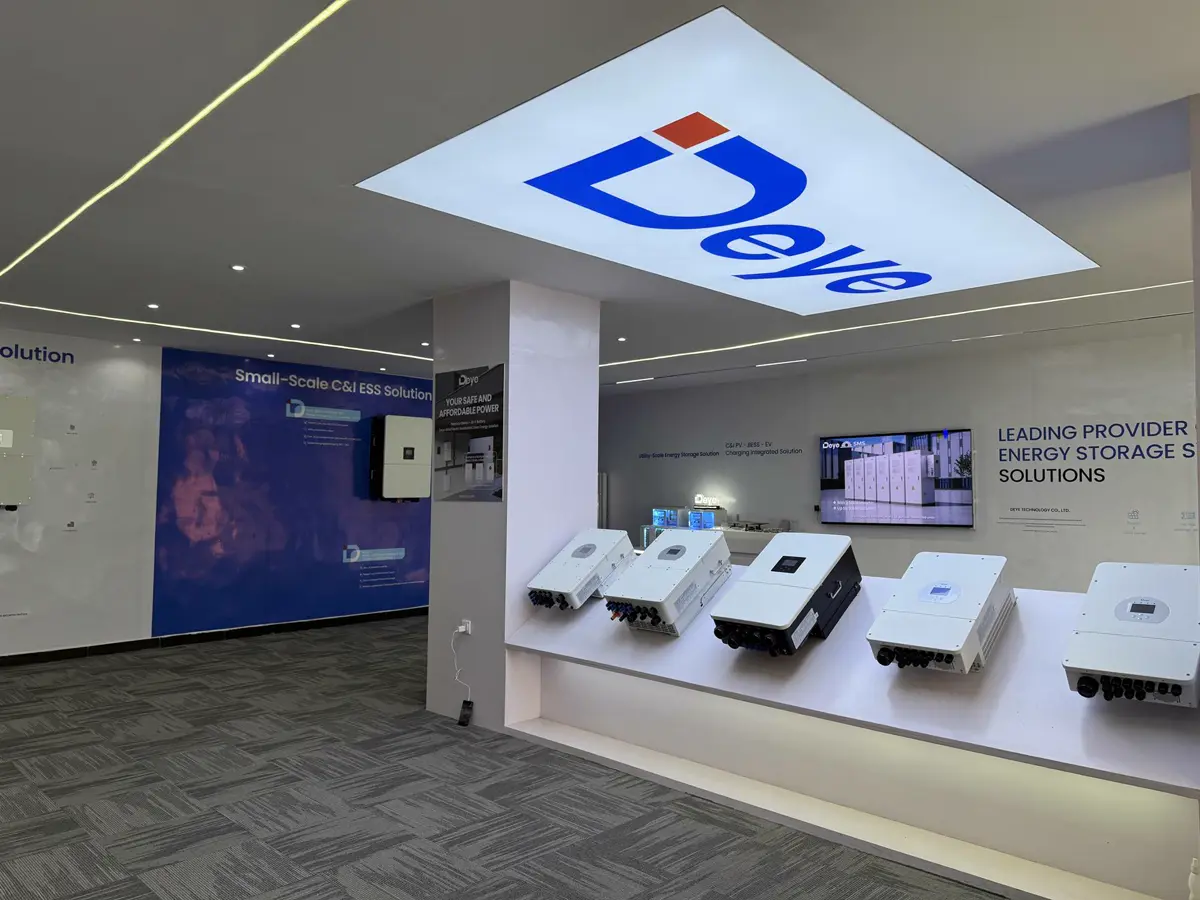
Choosing the right hybrid inverter is the single most important decision in a solar-plus-storage project. Oversize it and the customer pays for capacity they never use; undersize it and the system trips, fails to start motors, or cannot ride through outages. This guide walks through the five numbers you need — daily energy, peak power, surge, battery autonomy and PV array — using the DEYE hybrid range as a reference.
1. Add up the daily energy (kWh per day)
List every load the customer wants to run on solar and backup, multiply each appliance's power (in watts) by the hours it runs per day, and total the result in watt-hours. A fridge at 150 W running 8 effective hours is 1,200 Wh; five 10 W lights for 6 hours is 300 Wh, and so on. This daily energy figure (in kWh) drives both the battery and the solar array sizing — it is the foundation of the whole design.
2. Calculate the peak (continuous) power
Now find the largest realistic combination of loads running at the same time, in kilowatts. The inverter's continuous rating must comfortably exceed this peak. As a rule of thumb, leave 20–30% headroom for growth. A typical home running lights, fridge, TV, fans and one split air conditioner sits well within a 5 kW unit; add several ACs or a borehole pump and you move to 8 kW or 12 kW.
3. Allow for motor surge
Air conditioners, pumps, compressors and freezers draw a brief inrush current several times their running power when they start. A pure sine-wave hybrid inverter handles this, but the unit must be rated for the surge, not just the running load. When in doubt, size up — a starting motor that browns out the system is the most common cause of nuisance trips.
4. Size the battery for the autonomy you need
Decide how much of the daily energy must come from storage — evening use only, or full overnight and outage cover. LiFePO₄ batteries are typically used to about 80—90% depth of discharge, so a customer needing 8 kWh of usable evening energy wants roughly a 10 kWh battery. For areas with long daily outages, size for one to three days of autonomy and confirm the inverter's charge current can refill the battery from solar within a day.
5. Match the solar (PV) array
The PV array has to replace the day's energy and recharge the battery within the available sun hours. In much of West and East Africa, four to five productive sun hours per day is a safe planning figure. Divide daily energy (plus charging losses) by the sun hours to get the array size in kW, then keep the array within the inverter's MPPT voltage and current limits. Deepoint supplies N-type modules matched to each inverter so the strings stay inside spec.
Single-phase or three-phase?
Homes and small shops are almost always single-phase (5–12 kW). Hotels, factories, malls and data centres usually need three-phase units (30–200 kW), which also unlock peak shaving and tariff arbitrage on time-of-use plans. See the commercial storage and off-grid pages for worked examples.
Worked example: a Lagos villa
Say a villa uses about 18 kWh/day, peaks at 4 kW with one AC running, and needs full overnight and outage cover. A 5 kW DEYE hybrid inverter, a 10–15 kWh LiFePO₄ battery and roughly 4–5 kW of solar is a balanced starting point. If the customer later adds two more ACs, an 8 kW unit with stackable batteries leaves room to grow without replacing the inverter.
A quick sizing checklist
Before you quote, confirm: total daily kWh; simultaneous peak kW with 20–30% headroom; surge handling for the biggest motor; usable battery kWh for the required autonomy; PV kW that recharges within the sun hours; and single- versus three-phase. Get these six right and the system runs quietly for years.
Need a system sized for your project?
Send the appliance list, country and daily usage. Deepoint will recommend a DEYE hybrid inverter, LiFePO₄ battery and solar array combination, with datasheets and pricing.
Talk to Deepoint